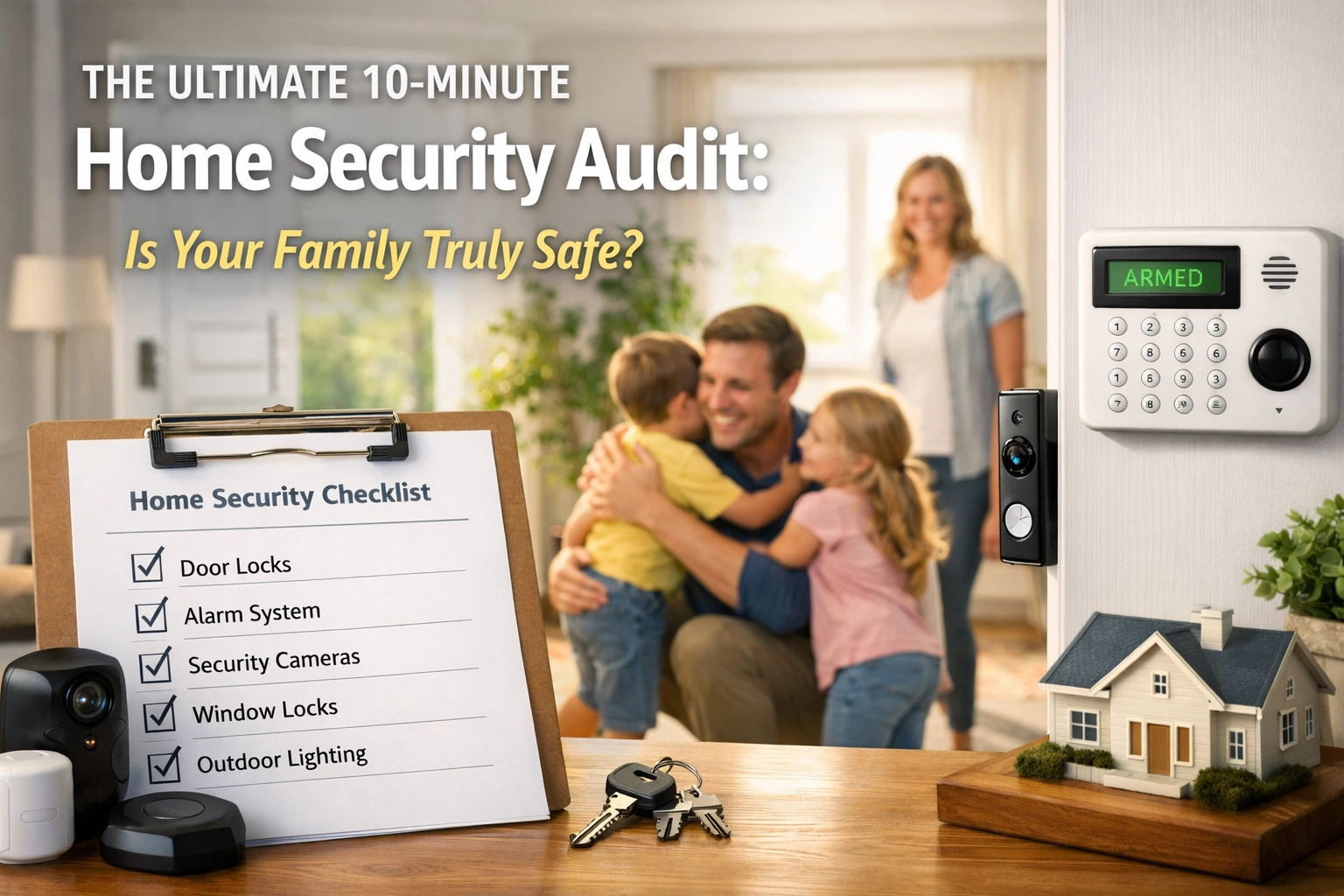
You deserve to feel completely at ease the moment you pull into your driveway. Your home is more than just a building; it is the sanctuary where your family grows, plays, and sleeps. But when was the last time you truly looked at your property through the eyes of someone looking for a way in?
Most homeowners assume their locks and a porch light are enough. In reality, security is about layers. A professional security installation provides the ultimate shield, but understanding your home’s current vulnerabilities is the first step toward total peace of mind.
This 10-minute home security audit is designed to help you identify the weak spots in your defense. Grab a notepad, set a timer, and let’s walk through your home together.
Step 1: The Perimeter and Curb Appeal (Minutes 1-2)
Your security audit begins at the curb. An intruder's first goal is to remain unseen. If your home offers plenty of hiding spots or looks like an easy target, you are already at a disadvantage.
🔴 Check Your Landscaping: Overgrown bushes near windows or doors are the perfect "blind" for someone trying to force entry. Trim all hedges to below window level and ensure tree branches are cut back so they can’t be used to climb to the second floor.
🔴 Lighting is Key: Does your home go dark at night? Motion-sensor lighting is one of the most effective deterrents. Check that your floodlights cover the driveway, side paths, and the backyard.
🔴 Signage Matters: Visible ADT signs and window decals act as a psychological barrier. Most burglars will skip a house the moment they see a monitored home security system is in place.
🔴 Hide the Goods: Can you see your 75-inch TV or expensive laptop through the front window from the street? If you can see it, so can they. Use sheer curtains or blinds to obscure high-value items.

Step 2: The Front Door: The Main Gate (Minutes 3-4)
It might surprise you to learn that nearly 34% of burglars enter right through the front door. This is often the most neglected area of home security systems because we use it every day and take its integrity for granted.
🔴 Inspect the Strike Plate: Open your door and look at the metal plate where the bolt enters the frame. If it’s secured with short, half-inch screws, a single kick could bypass it. Upgrade to three-inch screws that reach the wall stud.
🔴 Check the Deadbolt: Every exterior door should have a high-quality deadbolt. If your lock feels "mushy" or sticks, it’s a mechanical failure waiting to happen.
🔴 The Video Doorbell Test: Do you have a way to see who is at the door without opening it? A smart video doorbell integrated with your ADT system allows you to answer the door from anywhere in the world, giving the impression that you are always home.
🔴 Spare Key Habits: If you have a key hidden under a fake rock or the doormat, get rid of it today. Intruders know exactly where to look. Smart locks with unique codes are a much safer alternative.
Step 3: Windows and Side Entrances (Minutes 5-6)
Windows are the second most common entry point, especially those on the ground floor or hidden by shadows. During your professional security installation, an expert will often prioritize these "pathways of least resistance."
🔴 Check the Latches: Factory-standard window latches are notoriously weak. Test every window in your home. If a latch is loose or broken, it needs immediate attention.
🔴 The "Jiggle" Test: Even when locked, can the window be jiggled open from the outside? Older sliding windows are particularly prone to this.
🔴 Basement Vulnerability: Basement windows are often low to the ground and hidden by window wells. Ensure these are reinforced with security film or glass break sensors that alert your monitoring center the moment the glass is touched.
🔴 Second Story Access: Don't assume the second floor is safe. If there is a porch roof or a sturdy trellis, that window is an entry point. Ensure these are armed just like your ground-floor access points.

Step 4: The Garage and Interior Safety (Minutes 7-8)
The garage is often the "forgotten" door. Many homeowners leave the door from the garage to the kitchen unlocked, assuming the big overhead door is enough. This is a major mistake.
🔴 The Interior Garage Door: This door should be treated as an exterior door. It needs a deadbolt and a sensor. If a burglar gets into your garage, you don't want them to have a free pass into your living room.
🔴 Vehicle Security: Never leave your garage door opener in a car parked in the driveway. A thief can smash the car window, grab the remote, and have full access to your home in seconds.
🔴 Life Safety Devices: A home security audit isn't just about intruders; it's about internal threats. Check your smoke detectors and carbon monoxide sensors. ADT-monitored sensors are superior because they don't just beep; they send help even if you aren't there to hear the alarm.
🔴 Motion Sensor Placement: Walk through your main hallway. Is there a motion sensor covering the "choke points" of your home? These should be placed in areas that an intruder must cross to reach the bedrooms or the kitchen.

Step 5: The Smart Security Connection (Minutes 9-10)
For the final two minutes, sit down and look at your phone. In the modern age, your home security systems should be as mobile as you are. Total protection means having control at your fingertips.
🔴 Remote Arming: Can you check if your alarm is set while sitting at your desk at work? If not, you’re missing out on the most vital part of modern protection.
🔴 Google Nest Integration: With ADT’s partnership with Google Nest, your home becomes a proactive defender. Your cameras can distinguish between a person, a vehicle, and an animal, sending you only the alerts that truly matter.
🔴 Automation for Deterrence: You can set "scenes" where your smart lights turn on and off at specific times, making the house look occupied even when you're on vacation.
🔴 Emergency Access: In the event of an alarm, can you see a live feed of what triggered it? Speed of information saves lives.
Why Professional Security Installation is Non-Negotiable
While a DIY audit is a great way to start, the truth is that home security is a specialized field. A DIY kit from a big-box store often leaves "blind spots" that only a trained professional can spot. When you choose a professional security installation, you aren't just buying hardware; you are investing in 145+ years of experience and an A+ BBB rating.
By having a technician walk your property, you ensure that every sensor is placed perfectly, every camera has the right field of vision, and your system is backed by the most robust monitoring network in the country. Plus, most insurance companies offer significant discounts on homeowners' insurance when you have a professionally monitored system.

The Value of Peace of Mind
Think about the cost of a single break-in. Beyond the financial loss: which averages over $2,600: there is the emotional toll. The feeling of being "violated" in your own home is something that can take years to overcome. For less than the cost of a daily cup of coffee, you can prevent that trauma from ever happening.
You deserve a home that works for you. You deserve a system that watches over your children while they sleep and keeps an eye on your packages while you're at work.
Don't Wait for a "Reason" to Get Protected
Most people look into home security systems after something happens in their neighborhood. Don't be that person. Take the 10 minutes today to walk your property, identify your weak spots, and then let the professionals handle the rest.
With current offers including a $500 equipment voucher and professional installation, there has never been a better time to upgrade your life. Your family is your most precious asset: protect them with the gold standard of home security.
Learn more about our customized security solutions here.
Call today to speak with your Authorized ADT Specialist at
877-664-0673